




Most of us experience stress as a feeling such as pressure, tightness, irritability, or overwhelm. But stress is also a pattern happening inside your body, and that pattern can be measured. One of the most useful ways to see it is through something called heart rate variability, or HRV.
Even if your heart rate is 70 beats per minute, it doesn’t beat like a metronome. The space between each beat naturally shifts from moment to moment. That subtle variation is HRV.
Your autonomic nervous system is a bit like your own internal stress manager. It’s constantly balancing two processes: mobilization (the “fight or flight” side) and recovery (the “rest and digest”). Mobilization helps you meet deadlines, respond to emails, have difficult conversations, and move through a demanding day. Recovery slows the heart, regulates blood pressure, and restores energy, which in turn supports clearer focus, steadier emotions, and more sustainable performance over time.
HRV reflects how adaptable your nervous system is in real time. When your system is flexible and responsive, your HRV tends to be higher. When you’re depleted, overstimulated, or stuck in chronic stress, it often drops. It’s the adaptability that helps you recover. This means, when it comes to stress management, the goal isn’t to eliminate activation. It’s to move in and out of it more fluidly.
Once you understand your nervous system states, you can begin moving more intentionally between activation and recovery. Instead of waiting for your environment to settle so your body can rest, you learn how to create small physiological shifts that create inner calm, even in the middle of a challenging day.
Slow, paced breathing is one of the simplest ways to support HRV. For many adults, that means breathing in for about four seconds and out for about six seconds. Nothing dramatic. Nothing forced. Just steady and consistent breathing, a little slower and deeper than usual.
That pattern gently stimulates the vagus nerve and strengthens the body’s natural blood pressure regulation system. During such a practice, HRV often increases, muscle tension can soften, and thoughts may feel less scattered.
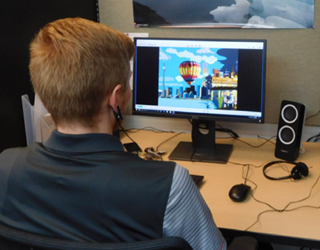
Breathing works on its own but seeing your heart rhythm respond in real time can deepen the learning. HRV biofeedback allows you to watch your heart pattern on a screen while you practice. You can see when the rhythm looks jagged and strained, and when it shifts into a smoother, more coherent pattern. For many people, that visual feedback builds confidence. It turns stress regulation into something observable and trainable.
If you’re curious about your own HRV, Ohio State’s SMART Lab (Stress Management and Resiliency Training) offers short biofeedback sessions for faculty and staff. During these sessions, you’ll see your heart rhythm in real time, learn practical breathing strategies, and practice skills you can use during your workday.
Some people come once to explore. Others return to strengthen their skills over time. If you’d like to experience it firsthand, you can register through Link to Health. Visit the “Appointments and Classes” page, select “Educational Programs” and search for keyword “SMART Lab” to view available dates and times.

 Facebook
 Twitter
 Email
Email